

By Mark Hayes
A considered analysis of primary source materials reveals that NA articulated an uncompromising version of Nazi ideology, and the group engaged in high profile activities that captured the attention of the mainstream and social media. Moreover, NA had a propensity for violence which led, not only to street confrontation, but to the expression of certain paramilitary pretensions. The rise of groups like National Action is indicative of the on-going threat posed by groups who refuse to relinquish their adherence to the Nazi creed. Such was the impact made by National Action it led to the organisation being proscribed under the terms of ‘anti-terrorist’ legislation in Britain. It is now a criminal offence to be a member of National Action, participate in its meetings or support the organisation in any way. This judicial intervention effectively ended the organisation in its chosen form, although it is highly likely that it will re-emerge elsewhere, in another guise.
In fact National Action claimed to be at the forefront of a ‘new wave’ of fascist activism in Britain and it is interesting to note that NA represented an explicit rejection of the recent ‘populist’ trend, identifiable in fascist politics across Europe in recent years. The attempt to achieve political success by toning down the fascist message, while complying with constitutional methods and adopting a radical right-wing agenda, has been the predominant modus operandi in the contemporary era. In Britain, for example the British National Party (BNP) expended some considerable energy trying to become ‘respectable’ and electorally viable whilst concealing its inner ideology, which was nevertheless still identifiably fascist. In this sense the fascists leading the BNP were deliberately trying to camouflage their ideological perspective with a more ‘populist’ discourse which focused on the issue of preserving British culture and identity. However, the BNP, despite making an initial electoral impact at a local level, was unable to sustain its success, and the far right in Britain today is disunited, consisting of a variety of much smaller disparate elements.
Indeed the origins of National Action lay in the spectacular collapse of the British National Party (BNP) which imploded after its electoral ambitions were forestalled in 2010. The dramatic demise of the BNP, which once held over 50 local council seats, effectively released a relatively large number of right-wing activists into the ideological ether, with some seeking a return to a more robust articulation of Nazi aspirations. The immediate forerunner of National Action, it could be argued, was English National Resistance, led by former BNP activists Kieran Trent and Matthew Tait, but its origins might also be found in other micro-groups like Islands of the North Atlantic (IONA), the Traditional Britain Group and the Integralist Party. Internet discussion groups like ‘Western Springs’ were also significant in providing a forum where far right activists could gather to exchange ideas and examine how unreconstructed fascists might re-group and recalibrate their political praxis. National Action was one outcome of this process of critical self-examination on the fringes of fascist politics in Britain. Significantly, at the outset, the ‘drunken yobs’ that appeared to coalesce around the ‘centrist’ English Defence League (EDL) were rejected by NA as a ‘charade’, and it also unambiguously dismissed the failed electoral strategy of the BNP as a ‘vanity project’. National Action therefore set itself the task of distancing itself from both single-issue protest politics and constitutional methods.
So National Action had no apparent interest in conventional politics or developing a ‘populist’ agenda, but constituted a straightforward, single-minded determination to return to the rigorous first principles of hard-line Nazism. As one of the more recent manifestations of fascism in Britain, NA certainly attracted some sustained attention from the media, which became fascinated by its unapologetic and uncompromising defence of Nazi ideology. Of course, there is a tendency in the media to exaggerate their coverage of ‘extremism’ for its own purposes, however (moral panics notwithstanding) the media nevertheless identified some of the more extraordinary elements which characterised NA. What was considered new and threatening about NA as a phenomenon was the group’s unconcealed admiration Hitler, its links to violent terrorists, and the new propaganda tactics deployed. Indeed, it might be argued that in some ways National Action represented a new style of fascist activism in Britain.
Origins
National Action was formed in 2013 as a semi-clandestine group advocating the neo-Nazi ideology of ‘revolutionary nationalism’. In fact, NA members saw themselves as the faithful soldiers of the original National Socialist credo. The emphasis within NA was on practical activism and ideological purity in order to produce what it called ‘an exciting new interpretation of nationalism’. Benjamin Raymond (Noyles) and Alex Davies (a former member of the BNP’s youth wing) became the most identifiable ‘leaders’ of the new group, which held its first conference in 2015. The unambiguous aim of the organisation was to return to a particular conception of national socialist ideology, as articulated originally by Adolf Hitler, whilst ostentatiously eschewing more conventional efforts at political activity, particularly elections. Electoral politics, according to NA, inevitably resulted in the dilution of long cherished political ideals. The objective was, in short, to precipitate a paradigmatic shift in neo-Nazi political values on the far right and in the process, as the NA website put it, produce ‘a cohesive nationalist youth culture’.
In essence National Action had a very particular political purpose, as the NA website proclaimed: ‘National Action is a National Socialist youth organisation which means our clientele are clean, intelligent, and ambitious people typically in their late teens or twenties. It is a scene for young Nationalists to network, engage socially, and be creative at a time when there is no prospect for a political success’. As the NA ‘Strategy and Promotion’ document explained: ‘We have been presented with an opportunity for this project as our market exploits a doldrum period in nationalism where there is no clear nationalist party to get behind’. The overall objective was put, quite succinctly: ‘our whole strategy places value on the public expression of a hard line and determined ideology’. The timing was right, NA argued, to return to primary principles. Moreover nationalists, according to NA, should never compromise on their convictions because ‘the arrival of fascism in the 20th century was the greatest event in world history…It is not an empty task we now undertake in reviving it’.
The organisation itself only numbered in the hundreds, but it was growing rapidly and consisted of committed neo-Nazi activists from across Britain, although the biggest area of strength was considered to be the North West. National Action activists saw themselves as an organisation of elite ‘stormtroopers’, which was emphatically ‘not for plebs’. The emphasis was also on attracting younger recruits, and there was an informal age limit of 35. This emphasis on youth was self-evidently designed to facilitate a vibrant and creative cultural milieu. As NA documentation put it: ‘youth is more than just a demographic – it is the basis of having a “scene”’. The group emphasised the need to attract nationalist ‘heroes’ who have the vision, not only to construct a network of cadres but, as they put it, ‘build a war machine that can tear through the tired institutions and rip them into bloody shreds’. Moreover, NA was designed to purvey neo-Nazi nationalism, not just as a set of ideas, but as a ‘way of life’, a culture and a lived experience. National Action therefore aimed to provide a secure space for Neo-Nazi activists to exchange ideas and interact, in order to generate a vigorous and effective neo-fascist network.
In order to convey its message NA utilised the most evocative imagery, whilst professionally produced graphics were designed to create an immediate emotional impact which was focused primarily on alienated white youth in Britain. The NA Website, which started in September 2013, aimed to attract attention and antagonise political adversaries. Lurid images and provocative language featured prominently (‘we are going to gas sub-human communist scum’) and this was combined with heavily edited footage of their practical activities. Interventions on the website were invariably confrontational, racist and virulently anti-Semitic. Self-evidently NA traded in extravagant, theatrical bravado on the blogosphere, whilst attempting to offer explicit access to excitement and adventure via participation in their so-called ‘white jihad’. Internet forums and the ‘dark web’ were also used explicitly to attract potential recruits (NA had facebook, tumblr and twitter accounts) and, according to NA, it alone possessed the ‘courage’ to pioneer a very aggressive form of agitprop which was ‘irreverent’ and ‘extreme’ because ‘hardcore propaganda’ suited its purpose as an organisation. As NA confirmed: ‘whether we are pitching this idea to other Nationalists or to the public we need our words to come in hammer blows’.
Position
The objective of National Action was to build an organisation that was resilient and determined, and able to command respect. To achieve this NA required people who possessed not only ideological commitment but, crucially, the capacity to fight. National Action stressed the need for participants who were much more committed than mere ‘followers’. The members had to become the ‘fighting element’ which would ‘remain pure’ in their adherence to their ‘political religion’: ‘Only a movement of strength lives in appreciation for the task of survival and the victory that will come. Only when you establish a power relationship with your enemies do you exist in a state of struggle and have any bargaining power’. As Raymond put it: ‘one day there will be a time for civilised discussion maybe, but we can’t do that until we make them respect us – now they are going to get their heads kicked in’.

Certainly some of NA’s activities were designed, at the very least, to provoke a response, for example distributing pro-Nazi leaflets in major multicultural cities like Birmingham, Coventry and Liverpool. NA held their first ‘white man’ march in Newcastle in 2015 and aimed to repeat the activity elsewhere. Indeed, in Liverpool in 2015 NA threatened to start a ‘race riot’, claiming ‘only bullets will stop us’. Although, on the day NA activists were forced into an ignominious retreat, the NA website maintained that ‘by leafleting in the heart of a cosmopolitan metropolis, we have shown that no matter how radical the message or how multiracial the area, Nationalists have no reason to fear going out on the streets and spreading the message’. National Action also organised ‘flash-mobs’ on campuses and NA claimed to have a presence in some British Universities. This type of ‘propaganda of the deed’ afforded NA a significant tactical advantage because it effectively deprived the anti-fascist opposition of the opportunity to mobilise. Furthermore, the fact that NA was unconcerned about the reaction it received as a consequence of its activities, was most vividly illustrated when its members posted pictures of themselves on the internet giving Nazi salutes in the so-called ‘corpse cellar’ at Buchenwald concentration camp in May 2016. The mainstream media was used therefore, not in an attempt to seek approval or solicit wider support, but to instil fear and raise their political profile by shocking the sensibilities of the general public.
Clearly the emphasis in NA was on ‘boots’ not ‘suits’ with a consistent, if controversial, message and a relatively high level of organisational competence. There is also evidence that, if left to their own devices, their tactics may well have moved well beyond the macho posturing of street confrontation. For instance, there was some discussion in NA circles, of the ‘one-man cell’ as a ‘functioning instrument’ which reflected a need to convey the impression that NA was ‘a group of action not just words’ intent on making a tangible impact on the political landscape. As NA put it: ‘to achieve our objectives we must at first use tactics such as those established by Louis Beam’s model of Leaderless Resistance which encourages the adoption of a phantom cell structure rather than a tiered and hierarchical form of army. Beam’s strategy needs to inform our initial engagements with the hegemonic forces who seek to suppress us’. Hence ‘lone wolf’ attacks, which are notoriously difficult to prevent because the activist acts independently of leaders or movement, were explicitly encouraged in NA literature. In short, in the absence of popular support, the Nazi activist was encouraged to resort to the despairing bravado of the autonomous assassin in an effort to precipitate chaos and make a political point. As NA explained: ‘we want things to get worse so that the system burns its bridges…worse is better’.
If we look more specifically at the political ideas and concepts articulated by National Action we can see that it sought to position itself with reference to the ideological heritage of fascism – all the familiar Nazi ideological themes were evident in the NA credo. National Action’s ideology was self-evidently fascist and Nazi: romantic anti-rationalism, social Darwinism, aggressive nationalism (xenophobia), along with an emphasis on an authoritarian state and a disciplined society, the need for assertive dictatorial leadership, and the idea of a ‘third way’ beyond communism and capitalism, were combined with an adherence to cultural/sociobiological racism – with a heavy emphasis on anti-Semitism. All of these features appeared prominently in NA literature and the group were clearly fanatical exponents of the classical paradigm of Nazism, as outlined by Adolf Hitler. Occasionally the florid rhetoric afforded a glimpse of what might be in store, should NA ever have achieved a position of influence: ‘if it is possible for us to take power, as we believe, then the most desirable and effective way of dealing with the race problem is for it to be carried out through civil and legislative institutions – the arms of the state’ but ‘involuntary repatriation or “ethnic cleansing” is not without precedent’. The practical consequence of National Action’s blatantly anti-Semitic perspective was entirely predictable and articulated without obfuscation: ‘it is with glee that we will enact the final solution across Europe’. Such sentiments were bound to induce anxiety in anyone with the most cursory knowledge of contemporary European history.
However, although the ideological template was provided by classical forms of fascism (as expressed in practical terms in Germany between 1933-45) and therefore National Action can be legitimately described as an authentic organisational embodiment of Nazi ideology, its political praxis also clearly complied with the tradition of fascism in Britain. The infamous triptych of the British Union of Fascists (BUF), National Front (NF), and British National Party (BNP) were all manifestations of the fascist experience set in a specifically British context although they also acquired their ideological impetus from the ideas which animated the classical fascist movements and regimes on the continent between1922-45. Each of these organisations, in its own way, kept fascist ideas alive in Britain during onerous circumstances and in its own peculiar way, NA was attempting to perform precisely the same political task.
That NA is very much a part of the fascist tradition in Britain might be axiomatic, but it is also worth noting that they also had much broader influences as well, partly because they emphasised the need for a pan-European perspective. Hence NA had links with a variety of far-right organisations such as National Rebirth of Poland (NOP), Sigud and the Nordic Resistance Movement, White Rex and Wotan Jugend. There is also evidence of contact with the Ukrainian paramilitary group Azov Division. National Action was also inspired by the ‘success’ of the Jobbik movement in Hungary, and the impact made by Golden Dawn in Greece which ‘glitters tantalizingly on the horizon’, indeed NA admitted that ‘Golden Dawn in Greece are a perfect example of what we’d like to replicate’.
It is also possible to discern other, more esoteric, ideological inspirations from Europe, such as the authoritarian impulses of Primo de Rivera and the Spanish Falange, Codreanu’s Romanian Iron Guard, or the anti-rational mysticism of Julius Evola. Perhaps, given the fact that NA set itself a much wider cultural remit, a more pertinent and contemporary comparator might be Casa Pound in Italy, which began as a squatter organisation but developed into a social network in the Esquilino district of Rome and spread to other cities. Furthermore, it is important to note that the increasingly globalised and interconnected nature of the world definitely helps groups like NA develop new relationships with like-minded individuals and organisations – this has precipitated dramatic changes in the scope and relevance of the broader ‘imagined’ community of fascist activists. Websites provide easy accessibility across national borders, and the internet facilitates direct contact between fascist ideologues in a way hardly imaginable to previous generations, therefore access to a plethora of explicitly Nazi ideas has never been easier.
Confrontation
Of course, active resistance to such organisations is imperative and fascism needs to be confronted both ideologically and physically. It is interesting to note that it was militant, street level anti-fascist activists who did most of the ‘heavy lifting’ when confronting the British Union of Fascists in the 1930s, the National Front in the 1970s and the BNP in the 1980s and 90s. Physical force, used as a tactic rather than a principle, was used effectively to confront and deter those organisations trying to intimidate and divide people in local communities. Indeed, this approach has been successful in the very recent past. A similar effort to ‘control the streets’ was attempted by Combat 18, which was formed by the BNP. Despite the pavement posturing reminiscent of contemporaneous ‘football firms’ C18 never actually fulfilled its pretentions. The BNP was, in effect, forced to ‘de-commission the boot’ (as Nick Griffin and Tony Lecomber put it) due to the assiduous attention of groups like Anti-Fascist Action.
Eventually C18 was jettisoned by the BNP as a state-infiltrated embarrassment in 1994. Combat 18 subsequently degenerated into a drinking club for drug dealers and Hitler-worshipping fantasists. In actual fact National Action effectively acknowledged that it was itself formed, at least in part, as a reaction to this failure to control public space in the face of sustained anti-fascist resistance: ‘National Action was formed in the face of adversity, in hate of the red terror that humbled and fell so many Nationalist groups before us’. Indeed, NA argued that ‘any group who is not working to actively combat these thugs is a non-starter because the group either gets suppressed, or they must self-marginalise their own activities to places where they have no effect’, therefore ‘we must first break the red terror’. So, NA itself was, in some ways, merely the latest effort to respond the success anti-fascist organisations have had in confronting fascists in Britain. Hence, despite its lofty ideological pretensions, NA were not so much the harbingers of a new national ‘revolution’, but the bitter bile produced after the fascist far right had digested the fact that they had been comprehensively defeated on the streets. This kind of resistance is entirely appropriate and necessary.
However, such a pro-active approach has been the subject of some considerable controversy recently with eminent intellectual Noam Chomsky questioning the utility of robust physical resistance against the (proto-fascist) Alt-Right in the USA. Of course, there are some powerful arguments which can be deployed against militant anti-fascist activists, and these tend to prioritise civil liberties and the right to freedom of speech. This is essentially the idea that fascist ideas can and should be exposed to the penetrating light of democratic debate. Rational people will, it is claimed, see through the lies and malevolent half-truths of fascist discourse and be convinced of the intellectual rigour of those advocating tolerance and freedom.
However, to prioritise liberal freedoms above political realities would be a fundamental mistake. We know, from historical experience, that fascists only use democracy in order to destroy it – although they are perfectly willing to milk the Parliamentary cow before it gets butchered. Fascists use freedom of speech in order to destroy it, and fascism in practice leads inexorably toward dictatorship, coercion and concentration camps. Moreover, freedom of speech is a contingent liberty, and cannot be construed as an absolute right in all circumstances, and much depends upon political circumstances and social consequences. We all accept constraints on our freedom of speech for the common good, and some of these restrictions happen to be enshrined in law. No-one would seriously support the right of paedophiles to argue in favour of sex with children.
Moreover, given the historical and theoretical context, ordinary people in working class communities, where fascists try to incubate their grotesque ideology, have every right to resist – indeed it becomes a moral obligation to do so, by all means necessary. A ‘no platform’ position with regard to overtly fascist organisations is, therefore entirely legitimate, and force is, in some very specific circumstances, a viable and necessary option. This fact has been confirmed by the British experience of anti-fascism, which has always been successful in challenging fascists for the control of public space. In fact, in many ways those on the liberal left are guilty of the most asinine hypocrisy because, unless they are pacifists, everyone accepts the utility of violence in certain circumstances. Of course, the conventional liberal mantra that ‘violence never solves anything’ would not survive a moment’s serious reflection and is only ever selectively applied by its protagonists – and it never seems to apply to those wielding the coercive power of the state. Moreover, in terms of recent history, it has often been liberals who have cynically used violence on a massive scale, whilst perpetrating illegal wars and colonial expeditions. Those of us who aspire to becoming part of a relevant (rather than ‘liberal’) left cannot afford to be squeamish about confronting the issue of physical resistance. Indeed, the failure to confront fascism effectively may consign us all to irrelevance.
Attraction
Now there is an even more disturbing aspect to all of this, which will undoubtedly unsettle the liberal intellectuals who study such things. Nazi ideology is threatening and dangerous because, to certain sections of the white working class, it can offer a far more satisfying and convincing credo than the austere individualism that underpins neo-liberalism. This assertion requires careful elaboration. Fascism can be attractive because it is a form of collectivism, which aims to transcend a sterile economic orthodoxy which focuses on the instrumental value of the individual consumer in the free market. One of the fundamental insights of fascist ideology was (is) the emphasis on the social dimension and its acknowledgement that people need to feel a sense of belonging, and that there is more to existence than autonomous agents cast adrift in the free market wilderness.
During difficult periods desperate people will seize on anything to provide an ‘explanation’ for their predicament and a prospect of respite. In fact, given the recent trajectory of economic decline in capitalist societies, for a growing number of people the actual material benefits of market-based freedoms are becoming far less obvious. The sense of purpose, devotion and dedication inspired by fascist ideology should therefore not be underestimated. Hence the Nazi ideal, dystopian though it undoubtedly is, nevertheless reflects an impulse to accommodate a collective consciousness which transcends existential atomisation and gives human existence a greater meaning. The fascists claim to be able to take everyone, minus the ‘other’, to a better life, and this kind of rhetoric resonates in marginalised communities where progressive political aspirations have been seriously attenuated. It is therefore important to note that the dominant liberal orthodoxy, which had assumed that pluralistic, multicultural capitalism had ensured the permanent defeat of fascism, looks exceedingly threadbare in the context of fascist and right-wing populist successes across Europe and the USA.

However, the real threat of an authoritarian future may not come directly from the neo-fascist micro-groups, although they retain a clear capacity to damage the social fabric. The genuine danger may come from a creeping state authoritarianism and an erosion of human rights, which moves the body politic towards the ideological territory inhabited by the far right. When this occurs it makes it much easier for the noxious ideas of fascist micro-groups to gain traction. The state may be a complex (and sometimes contradictory) collection of institutions, organisations, processes and interactions (both repressive and ideological) but it is still possible to discern an overall strategic imperative or ‘direction of travel’ and an ostensibly liberal democratic state, which is unable to secure hegemony during a period of socio-economic and political crisis, may attempt to solve this dilemma by moving toward a more authoritarian, ‘exceptional’ dispensation. Here we must effectively acknowledge and assess the potential of this dynamic to exert much more coercive state power.
In fact we can discern this process now in the UK. The growth of officially sanctioned ‘Islamaphobia’ via counter-terrorism strategy, the expansion of the security agenda and the systematic erosion of civil liberties as a consequence of the so-called ‘war on terror’ (which has necessitated the militarisation of the police, mass surveillance, secret courts, suspension of habeas corpus, extraordinary rendition, ‘black site’ prisons, the use and justification of torture and extra-judicial assassination) all indicate unambiguously that the scope for a much more authoritarian version of liberal democracy is growing exponentially. All of this is, of course, underpinned by the sclerotic influence of secret state agencies which have honed their craft during the years of colonial subjugation, and which still remain largely unaccountable for their actions. This is why it is absolutely pointless to rely on the state to deal with fascism whilst it is itself moving in a proto-fascist direction.
Intervention
Thus, in such a context, the official ban imposed on National Action by the British government (which was wildly applauded by many liberals) may actually be counter-productive in terms of preventing fascism – it will have little tangible effect on actual activists, who will simply engage in more clandestine activity, whilst the measure itself reflects the power of a state which has dramatically (and seemingly inexorably) enhanced its discretionary authority and coercive capability. It is interesting to note that the UK’s Prevent strategy outlines a list of ‘British values’ to be adhered to whilst in the USA the department of Homeland Security has already formally classified Antifa protests as ‘domestic terrorist violence’. Here, with the state effectively intervening to decide what is a ‘legitimate’ political perspective, we seem to be heading into an exceedingly dangerous area of jurisprudence, the logic of which presages the emergence of an ‘exceptional state’ that formally dispenses with the constraints upon central executive authority.
National Action may have articulated a genuinely nasty Nazi ideology, but the idea that state legislation is the best way to deal with the threat is a categorical error. By allowing the state to, in effect, determine the realm of ‘responsible’ political discourse the ‘populist’ parties of the right make it much easier for fascist ideas to gain traction. So such a state ban, aiming to prevent a ‘vile ideology’ in the name of liberal tolerance, can produce (in the longer term) precisely the opposite effect. Hence the ballot box, or the size of fascist organisations are not the only matrix by which we might measure the success of fascist ideology. Its not that the liberal damns will be breached by a tidal wave of fascist votes or that Nazi-micro-groups might metastasize, but that democratic values, institutions and processes are effectively eroded from within, thereby creating the conditions for fascist success in the future. The elliptical slide into a qualitatively different type of regime may be gradual and incremental and in this sense the fascist lunatics on the fringes of the political spectrum do not need to do very much because the practical policy output of the state, which reflects and sustains asymmetrical power relationships, is moving the ideological centre of gravity in their direction.
Thus, the liberal democratic state, deploying the rhetoric of ‘security’, ‘safety’ and ‘stability’ moves inexorably toward an altogether more sinister proto-fascist formulation. It is always worth remembering that ultimately the state’s polycontextual function, despite its existence as a site of political struggle reflecting wider social contradictions, is to protect the material interests of the dominant class – to ensure, more specifically, social stability and the economic conditions conducive to continued capital accumulation. It is also worth noting that in global terms, where free market capitalism is dominant, the authoritarian conception of the state is far more prevalent than the liberal democratic model. Capitalism’s connection to democratic forms and structures is (and has always been) extremely tenuous and contingent upon a range of factors which are difficult to predict or control. There is no impenetrable wall of liberal tolerance separating conventional politics from fascism, despite the comforting assurances of politicians. Certainly the neo-liberal political project which emphasises ‘austerity’ and ‘security’ has precipitated a dynamic which is driving democracy toward a more dictatorial form of state which attempts to (re)exert control by ossifying the balance of social forces in favour of capital.
Myths
Such an observation means that it is important to address explicitly the ‘failure of fascism’ thesis which asserts that fascism was comprehensively and permanently defeated in 1945. In fact in many ways the ‘failure of fascism’ hypothesis reflected the uncritical assimilation of a convenient cultural myth. The notion of fascist ‘failure’ tends to obscure the fact that fascism has made some significant progress, has set the political agenda and retains the capacity to do serious damage to the social fabric. The focus on the caricature villains of the fascist ‘other’, with their swastikas and overt anti-Semitism enables society to ignore some of its own imperfections, and obscures the real relationship between Conservatism and fascism which is far more ambiguous than conventional wisdom suggests. This point is worth developing because a kind of anti-fascist myth exists in Britain, as a consequence of the war. The uncomfortable fact is that the war against Hitler (and Mussolini) reflected a desire to protect certain long-held strategic, geo-political and economic interests, rather than a conflict over ideological principle or morality.
In short, the British ruling class was drawn into an anti-fascist position by the foreign policy of Hitler, which posed a real threat to Britain’s material interests. To put the point more bluntly, the war, from the British policy-making point of view, did not reflect any deeply held antipathy toward fascist ideology. Indeed, many members of the British ruling class expressed admiration for fascist ideas, and noted the various ‘achievements’ of fascist regimes. Certain sections of the British upper classes not only flirted shamelessly with fascism before the war, many Conservatives saw fascism as simply a more virile and robust expression of their own ideas. Even the Conservative party’s own ‘anti-fascist’ warlord, Winston Churchill, is on record as expressing his admiration for both Hitler and Mussolini, and the dullards in the royal family would have undoubtedly supplied their very own Quisling or Petain, if the war had gone badly. The collaborators would undoubtedly have come from the Conservative elites and the Establishment.
So, in effect, the war in the West represented a conflict of interests rather than ideas (in contrast to the ideological war of annihilation in the East) – it was a conflict conducted primarily against fascists rather than fascism. This dimension of the conflagration has, of course, been distorted by post-war reaction to the Holocaust, which revealed the evil essence of Nazism and precipitated a retrospective rationalisation by Conservative elements in Britain. This revision may have been an understandable reflex in response to Genocide, but it should not be allowed to obfuscate the real nature of the relationship between Conservatism, the ruling class and fascism. The reality is that it is the Conservative classes, the people with power and privilege, who are most likely to succumb to the fatal allure of fascism during a period of crisis, and the state itself may be seduced by solutions that have much more in common with fascism than liberal democracy.
Conclusion
The fact is that unrestrained capitalism makes it much more difficult to solve the problem of violent right-wing micro-groups because the economic system, which produces dramatic levels of social inequality, and which is systemically prone to intermittent cyclical crises, actually incubates the fascist contagion. In such an economic context there is an inevitable populist impulse to blame ‘immigrants’ and ‘refugees’ for resource scarcity. In such a conducive situation, the fascist far right offers seductively simplistic solutions to complex socio-economic problems. In response to this the liberal-left response has been worse than useless. Indeed, the stubborn liberal-left commitment to ‘identity politics’, which re-configures the ‘white’ working class as an ethnic category, actually plays into the hands of those stressing the significance of ethnicity. Fashionable post-modern cynicism about the utility of meta-narratives and collective action have not only hampered the left, they have underscored the preconceptions of the far right by prioritizing ethnicity. In effect, the contours of the ideological territory mapped out by some on the ‘politically correct’ liberal left are familiar to fascists and easy to navigate. The separatism of ‘special interests’ therefore needs to be replaced by an analysis based primarily on ‘class’, which actually means challenging the ‘sacred cow’ of ‘multiculturalism’.
Hence, those activists who focus entirely on the stubborn persistence of the pathological misfits and morons who inhabit the Nazi micro-groups, whilst ignoring the nature of the state and the socio-economic and political context within which such activity takes place, not only diminish our chance of understanding why these groups emerge, it effectively exonerates those who have been complicit in creating an environment within which such ideas and groups can flourish. There is an entirely understandable urge to recoil at the message conveyed by groups like National Action – but they are unlikely to disappear completely unless the socio-political and economic environment which keeps producing such micro-groups is adequately addressed.
Indeed, disregarding the deeper contextual dimensions of fascist activity is not only an impediment to effective analysis, it is a pusillanimous dereliction of duty. Anti-fascists need to focus their strategy on the fascist organisations themselves, but also on the state/society which provides the context within which this conflict is being played out. In the ‘age of austerity’, where the attempt to re-impose neo-liberalism after the financial crisis has exposed the naked class interests which underpin the capitalist economic system, nothing is more important than understanding the precise nature of the threat posed by the far right because, as Bertold Brecht once remarked ‘the bitch that gave birth to fascism is on heat again’!
NO PASARAN!
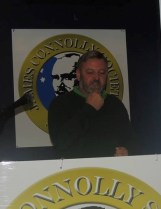
Mark Hayes started as an industrial labourer for British Shipbuilders in Woolston, Southampton in 1978. Whilst studying for a degree, he was given a short-term contract as a lecturer. Mark obtained a first class honours degree in politics from Portsmouth Polytechnic in 1984. He completed his PhD at the University of Southampton on the topic of the extreme right in British politics. Mark has published widely, including books, book chapters, journal articles, book reviews and commentary.
This article originally appeared at Freedom News and is republished with permission of the author.
107 Cowgate is run by volunteers and we need your support to survive. Please donate to help sustain the site and the tours, conferences and other educational services we provide. Donate Here Now!
107 Cowgate On Social Media
On Twitter
On Facebook
Jim Slaven tweets @JimSlaven
 107cowgate